The “Truck Injury Lawyer Blog” points us to a new development in the world of trucking accidents:

In his recent article, Premiums Fall 10% to 50% As New Firms Enter Market, Frederick Kiel describes the effect that the drop in premiums has on the trucking companies, as these new insurance companies are offering across the board rates to trucking companies in an effort to compete for their business. …

These new insurance companies are offering low premiums in an effort to gain new business, a trend that has been seen intermittently since the 1980s. Perhaps now is the time to look at the minimum insurance required to be carried by tractor trailer companies. Congress set the minimum rates back in 1984 at $750,000 for some companies with most being required to carry $1,000,000. Inflation and time have eroded the value of the coverage. Medical bills and the costs associated with catastrophic injuries have risen dramatically. Today, in a catastrophic case, the minimum limits are paid and quickly spent. The injured are then left for the taxpayer to pay for through medicaid or some other assistance program.

$1 million frequently will not cover the damages in a catastrophic personal injury case, particularly not where there will be extensive continuing medical treatment. $1 million also frequently does not cover wrongful death damages, and it usually will not cover an accident where multiple people have catastrophic injuries.

although the article does not address it, an important point to keep in mind here is how much safer trucking these days should be given the depth and breadth real-time monitoring available to trucking companies. Traffic, weather, and driver alertness — down to excruciatingly minor details — are all readily apparent in real-time to fleet managers, thereby eliminating the bulk of the systematic risks faced by truckers that cause major motor vehicle accidents.

If trucking companies used this technology appropriately — rather than using it solely to run their drivers right up to (and frequently beyond) the Federal Motor Carrier Safety Regulation limits — and purchased adequate insurance, including insurance with coverage for each plaintiff, rather than the accident as a whole, the costs and financial risk of trucking would be dramatically reduced.

Read more about our personal injury and automobile accident legal services.

Sometimes I read Kevin, M.D. out of what I can only assume is a hidden desire to gnash my teeth thinking about medical malpractice:

Massachusetts is allowing a new form of malpractice lawsuit to go forward:

A woman wrecked her car, killing an innocent bystander. Now the bystander’s widow is suing the woman’s doctors, arguing that they should have warned her not to drive while taking the pain medicines they prescribed.

The problem is, a majority of medications can lead to lightheadedness and dizziness, which in theory, can impair the ability to drive. Blood pressure and diabetes drugs for instance. Should patients taking these medications be warned not to drive?

At the very least, I would be very wary of prescribing any form of narcotic medications if these types lawsuits were to succeed. Patients lose again.

I’ll put aside the assertion that "a majority of medications" are at issue; I imagine he wrote that as a throw-away line.

On to the merits, it’s interesting that Kevin does not attack the nominal "problem" with the ruling, in that it creates the right of third parties to sue physicians where the physician was negligent in their treatment of a patient and that negligence injured the third party. That’s what all the doctors in Massachusetts were freaking out about. So we’ll leave that to another day.

Instead, he apparently frets that physicians should not be held liable where they failed to warn patients about the risks of the medications they are prescribing.

Why not? Is it really so hard to hand a patient a brochure or to talk over the risks on the package with them? Is it really so terrible if the standard of care requires a physician listen to their patient and, upon hearing an elderly woman say she feels faint while driving, suggest she stop driving?

The practical answer most physicians would give is that of course they want to take the time to discuss every detail of the medication they are prescribing to their patients, but they simply can’t. If they did that, they wouldn’t make nearly enough money to support their practice.

That’s not a complaint about medical malpractice, trial lawyers, or torts. It’s a complaint about insurance reimbursements, which encourage doctors to treat patient visits like speed dating.

So stop blaming us.

* gnashes teeth *

If you were injured by medical malpractice, contact a Philadelphia medical malpractice attorney.

This isn’t a political post, at least not intentionally.

The Wall Street Journal on Saturday carried a story about the legal troubles of the Wasilla sports complex which was built under Sarah Palin’s watch (the story isn’t new, see these links). It gives us a good window into the two main types of "legal advice" a lawyer can give to an organization or business — i.e., advice for avoiding certain legal risks and advice that weighs different possible legal outcomes — and how organizations and businesses should respond to that advice. The story’s been picked up as an example of poor executive judgment by Sarah Palin; it may be, but it’s not that simple.

Short story: in the late 1990s Wasilla reached an agreement to buy a 145-acre lot for $126,000. The seller then went with another buyer, Wasilla sued, won initially, began construction, was reversed, and had to eminent domain the most important 80 acres. At the end of the day, Wasilla paid $250,000 in legal fees and was ordered by an arbitrator to pay $836,378, plus $336,000 in interest, for the land.

Since all land is unique, failed-and-repurchased real estate deals rarely fail for a fraction of the original price. They fail for a multiple of the original price. So it’s not surprising that, once the deal failed the first time, Wasilla ended up getting a little over half of what they "bought" for ten times the price they negotiated. Lawyers and real estate brokers know that happens.

In essence, two things went wrong for Wasilla:

  • Wasilla never finalized the initial deal;
  • Wasilla relied on a federal district judge’s order in 2001 in their favor, which was later reversed.

The former is a classic example of an avoidable legal risk. When lawyers study for the bar exam, few things are pounded in their heads so forcefully as the need to follow precisely the requirements for the transfer of real estate. For example, the failure to ‘record’ a real estate purchase typically voids the putative buyer’s title. It’s that serious.

So it’s a bit surprising to see this paragraph:

City officials negotiated a price of $126,000. Months passed without the city’s securing a signed purchase agreement, according to the city’s attorney, Tom Klinkner of Birch, Horton, Bittner & Cherot.

An oral agreement to purchase real estate is unenforceable, barred by the statute of frauds every state, including Alaska. Little wonder the seller (the Nature Conservancy) thought it could sell it to another buyer, and the buyer thought they could buy it.

The real question is: who let a fully negotiated real estate deal sit around? Did their lawyer fail to tell them they had to get moving if they wanted to make it enforceable? Did the city sit on its hands, perhaps fretting about tendering the cash? Someone dropped the ball; it’s that simple.

After Wasilla sued to enforce their unenforceable deal, I haven’t the foggiest clue how they convinced the Federal District Court Judge to rule anything in their favor, but apparently they did.

Which brings us to the latter, which was likely either a failure of the lawyer to weigh the legal risks appropriately or a failure of the executive to appreciate the consequences of those legal risks once presented to her. After the order in Wasilla’s favor,

Ms. Palin marched ahead, making the public case for a sales-tax increase and $14.7 million bond issue to pay for the sports center, which was to feature a running track, basketball courts and a hockey rink. At the time, the city’s annual budget was about $20 million. In a March 2002 referendum, residents approved the mayor’s plan by a 20-vote margin, 306 to 286. The city cleared roads, installed utilities and made preparations to build.

Not necessarily the wrong decision. They had an order in hand, plus unlimited eminent domain power if something went wrong. If they wanted the land, they were going to be able to get it, the question was just how much they would pay (including legal fees) and how long until the ordeal was over.

But recall the circumstance — a failed real estate deal — in which the eventual price may need to be many multiples of the original deal. Those numbers aren’t insignificant in this context, and they had the capability to explode into a significant fraction of the city’s budget. Order or not, both the lawyer and the city should have been concerned.

"[T]he city believed it would prevail …" I haven’t seen the briefs or the order, so I have to speculate. Wasilla had prevailed in the first instance, which itself makes it reasonable to think it could hold up on appeal.

But a lawyer is held to a higher standard than what could be reasonable; they’re hired not to make plausible judgments, but to make sound ones. Did the lawyer not advise the city of the high odds of reversal of their enforcement of an oral real estate agreement? Did the city ignore that advice and then not bother with less risky/costly solutions, like settling with the other buyer before committing $14 million to that lot?

Maybe the City was advised of, and considered, the risk of reversal followed by an expensive eminent domain process, and charged through anyway, firing up the bond issue, construction, et cetera. That’s not necessarily a bad decision, though it may be rash given the numbers involved.

At the end of the day, I just can’t help but think that at least one, and possibly two or more major mistakes in judgment were made in this whole endeavor.

Someone let the initial purchase agreement lapse, as simple and plain an error as ever was. It wasn’t even a bad judgment call; it was a failure to minimize an obvious legal risk.

Then someone didn’t properly weigh the risks of the litigation, a more subtle, but here more costly, error.

There’s a distinction between "weighing the risk of litigation" and "predicting the outcome." No one can do the latter, nor should they try. The former, though, must be done, and it involves two separate exercises of judgment: the legal judgment of the lawyer in determining the possible outcomes and their likelihood, and the business / administrative judgment of the city in assessing the effect of those outcomes on the city and the best course in context.

One of those two was missing here. Which one?

If you haven’t been following, Victoria Pynchon at the Settle It Now Negotiation Blog and I have been having a running discussion about The Settlement Unicorn, which I originally defined as follows:

I’ve heard of a mythical beast, which I’ll call The Unicorn Settlement, where two hostile parties on the verge of a lawsuit get lawyers, almost file suit, and then, through deft representation, settle their differences peacefully and move on.

Let me exclude from The Unicorn a particular class of dispute, where two businesses with an ongoing relationship have a big dispute. I exclude that because, while I’ve seen many such disputes resolved pre-litigation, it has always been in the context of an ongoing relationship the value of which exceeds the value of the dispute. So I don’t call that a "settlement of a case," I call it a "continuation of a business relationship."

Victoria most recently gave an example in a medical malpractice case, which caused me to move the goal posts:

Thus, when the parties agreed to mediate, there was likely $40-60,000 "on the table," which could either be used to help settle the case or could be thrown away on experts. As noted above, that sum alone — putting aside attorneys’ fees and all the other costs and issues — likely represented between one quarter and one half of the eventual settlement value, and the lawyers, whom I am guessing were experienced in medical malpractice, both deserve credit for recognizing this economic waste.

But that’s why I just can’t verify this as an actual sighting of the mighty unicorn. To me, it’s analytically similar to my initial example of two businesses who resolve their dispute not because they really reach an agreement, but because the cost of the dispute is less than the value of their continuing relationship. The equation above doesn’t work in a wrongful death or birth injury case. It frequently doesn’t apply in cases worth more than $250,000 and virtually never applies to cases worth more than $500,000.

So Victoria commented:

On to the main point, isn’t there ALWAYS some "external" factor that brings litigating parties to the table?

Which external factors do you want to rule out for our poor unicorn?

I deftly didn’t answer for several days [sorry, Vickie]. Let me clarify: my biggest issue with her example was my suspicion that the final settlement didn’t substantially exceed the cost of continued litigation. As such, it doesn’t really look like a genuine desire to settle, it looks like a cost-avoidance measure with a little bit of personal understanding (the scar) involved.

That’s all well and good, and covers a lot of cases, but it’s not what I’m looking for and what I think needs more consideration. What I’m looking for is a settlement reached, for substantial money, because the lawyers sat down, considered the case, and came to an agreement on its value.

The frustratingly inefficient process that nags at me is this: after my investigation of a case, I have a good idea of three different numbers:

  1. the highest reasonable verdict value of the case;
  2. the likely settlement / verdict value;
  3. the lowest reasonable successful resolution.

Unspoken there is #4, a defense verdict / abandoning the case, which I guess you could say is a consideration, except that, given how I’m largely in the business of contingent fee cases, I’m not in the business of taking cases I think can’t win. It’s always a concern, but not for settlement: if I settle a case, I settle it at a "win" amount. Otherwise I go for #1 and don’t look back.

Here’s the frustrating part. Every insurer is different, as is every defense attorney, and certainly every defendant, and there are disincentives for all of them (respectively bureaucratic, financial, and emotional disincentives) not to settle early. And even though I’ve done defense work, I know I just don’t get how this adjuster works, how this case is evaluated, how my client is lying, blah, blah blah.

But at some point the adjuster, lawyer and/or client will start throwing numbers around in their head. At least along the lawyers, the #2 numbers usually aren’t that far apart, and will be within half (plus or minus) of what a judge / mediator would put on it for settlement purposes.

Time after time, I litigate a case for months / years, for which I’ve known #2, and after all that time and money, no one knows any more than when they started. Some defense lawyers will, after the close of discovery, start talking settlement. Others refuse to discuss until jury selection.

Now, in some circumstances, such litigation is inevitable. Take a birth injury (hypoxia) / medical malpractice case. The potential damages are enormous, and heavily dependent upon developmental / life care / economic assumptions. There’s always a thrombophilia defense, there’s always some Chair-of-Whatever who can describe how a fetal strip says the opposite of what it actually does. So we’ll need to litigate, depose the doctors, find the experts, wave to the insurance surveillance, and get the whole thing ready for trial before appropriate numbers are offered.

On others, it’s just plain silly. Here’s a hypothetical: industrial product failed, 54yo male client spent 16 days in the hospital, lost $80,000 in wages while recovering in physical therapy for months, now earns $15,000 less per year at a crummier job, has a recurring severe pain in legs, and can’t engage in normal physical recreation anymore. He’ll need continuing care plus a couple surgeries.

There are thousands of cases like that every year, more than enough to get a contemporary sense of "what they’re worth."

Months of discovery will create dozens of copies of his medical records, find out he had three workplace safety violations in the past 15 years (none related to the machine), and reveal the company has had two other incidents with this same product, but no smoking guns.

Just before trial, we’re exactly where we started, except the insurance company is poorer $50,000-$150,000 in legal fees and experts, I’ve put out $20,000-50,000 in costs and experts, and my client has gone more than a year since filing suit living off loans from family to pay off the massive credit card debt and home equity loans they took on immediately after the accident.

Why did we mess around all that time? The defense lawyers would have known proving liability wouldn’t be that hard for me, and that neither me nor my firm ever shows up to trial unprepared. All of their discovery was, at best, a half-hearted fishing expedition. The bulk of what they did was force me to "prove" things that should have been beyond any genuine dispute. Why couldn’t we get this done sooner?

Victoria, do you have any examples of two parties sitting down, before largely completing litigation, and wrapping up a case for substantially more than nuisance / cost of suit? If so, what brought them to the table?

Talking Points Memo raised a good point while watching McCain’s nomination speech on television.

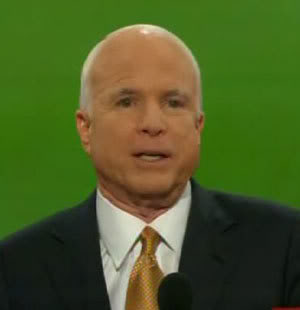
Why was he giving it in front of a green screen?

McCain Greenscreen


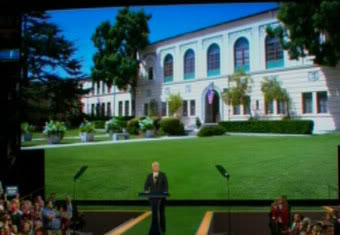
As the camera panned out, the whole backdrop was revealed:


McCain Backdrop


Ah, okay. He’s giving his speech in front of… a mansion?

Then TPM’s readers solved the mystery: it’s a picture of a Middle School in North Hollywood, California.

Why would he use that?

Apparently it’s Walter Reed Middle School. Like Walter Reed Army Medical Center.

There are three possibilities:

  • as part of a "small town" theme for the convention, the RNC wanted to showcase the San Fernando Valley, a racially diverse section of Los Angeles of particularly high population density;
  • after showing slow-motion video of the World Trade Center attack, the RNC sought to use an almost-Nabokovian depth of irony and subtlety to convey that domestic freedom and prosperity are dependent upon the sacrifice of soldiers in foreign wars; or,
  • some technician searched an image database for "Walter Reed" and used the above without double checking what it represented.

What do you think?

An interesting aside from Sovereign Bank v. BJ’s Wholesale Club, Inc., 533 F.3d 162 (3d Cir. 2008), a complex business dispute discussed in my prior post.

Here’s the deposition testimony given by a Visa corporate representative, on which the Third Circuit relied in reversing summary judgment in favor of the Acquirer:

Q: [by Acquirer’s counsel] Is it fair to say that the operating regulations are not intended to benefit a single group of participants, but the Visa payment system as a whole?


Objection. Leading.


A: [by Visa rep] It’s fair to say that the core purpose of the operating regulations is to set up the conditions for participation in the system, to set up rules and standards that apply to that ultimately for the benefit of the Visa payment system, the members that participate in it and other stakeholders such as cardholders, merchants and others who may participate in the system as well. (emphasis added).


Q: They may have some incidental benefit; is that correct?


Objection


Leading, and calls for a legal conclusion.


A: The bylaws and operating regulations, by their terms, apply only to members. So to the extent you mean they might have benefits beyond the rules that apply to other stakeholders, that’s correct. They’re not directly parties to these rules. (emphasis added)

Stop for one second and consider: these questions were asked by the Acquirer’s counsel. They were blatantly leading ("is it fair to say") and tried to get legal conclusions ("incidental benefit"), resulting in the Visa corporate representative rejecting their argument, providing fodder for the Third Circuit to overturn their summary judgment.

I don’t mean to question the tactical decisions of the Acquirer’s lawyers. Indeed, given the absence of other deposition excerpts in support of the Issuer’s argument, there seems to have been a reasonable basis for the Acquirer’s lawyer to think the Visa corporate representative was going to give them exactly what they wanted to hear.

But the representative did not, and instead gave the appellate court grounds to overturn summary judgment when, as mentioned above, it appears there was little other testimony favorable to the Issuer.

Just something to keep in mind: as tempting as the coup de grace may be, it rarely works as planned.

Courtesy of the complicated mess that is Sovereign Bank v. BJ’s Wholesale Club, Inc., 533 F.3d 162 (3d Cir. 2008), in which credit card "Issuers" sued credit card "Acquirers" and "Merchants" (Acquirers are the companies that process transactions for the Merchants) after a bunch of credit card numbers were stolen from the Merchant.

The big issue is: are Issuers intended beneficiaries of the Merchant and Acquirer’s agreement with the Visa network, which includes a number of anti-fraud regulations that the Merchant and Acquirer allegedly didn’t follow?

Historically, under Pennsylvania law, "in order for a third party beneficiary to have standing to recover on a contract, both contracting parties must have expressed an intention that the third-party be a beneficiary, and that intention must have affirmatively appeared in the contract itself." Scarpitti v. Weborg, 530 Pa. 366, 609 A.2d 147, 149 (Pa. 1992) (citation omitted). Sovereign appropriately concedes that it is not an express third-party beneficiary of the Visa-Fifth Third Member Agreement. However, in Scarpitti, the Pennsylvania Supreme Court adopted § 302 of the Restatement (Second) of Contracts. Id. That provision allows an "intended beneficiary" to recover for breach of contract even though the actual parties to the contract did not express an intent to benefit the third party. Section 302 provides as follows:

Intended and Incidental Beneficiaries

 (1) Unless otherwise agreed between promisor and promisee, a beneficiary of a promise is an intended beneficiary if recognition of a right to performance in the beneficiary is appropriate to effectuate the intentions of the parties and either

(a) the performance of the promise will satisfy an obligation of the promisee to pay money to the beneficiary; or

(b) the circumstances indicate that the promisee intends to give the beneficiary the benefit of the promised performance.

(2) An incidental beneficiary is a beneficiary who is not an intended beneficiary.

Got all that? Summary judgment reversed, based upon a memorandum and deposition testimony indicating that the regulations were for the benefit of all the members, as discussed in the next post.

Update: for some reason, movable type ate most of my post, which has been corrected.

From the Middle District of Pennsylvania:

In Pennsylvania, an individual who sustains injury in a motor vehicle collision that is aggravated by subsequent medical negligence may recover damages for both injuries either from the driver exclusively or from the driver and the negligent medical practitioner in tandem. See RESTATEMENT (SECOND) TORTS § 457 (s1965) [hereinafter "RESTATEMENT"]; Smialek v. Chrysler Motors Corp., 290 Pa. Super. 496, 434 A.2d 1253, 1258 (Pa. Super. Ct. 1981) (stating that "the original tortfeasor[ in an automobile collision] is . . . fully responsible . . . for the negligent manner in which a physician or surgeon treats the case"). The plaintiff may recover all damages solely from the negligent driver because subsequent faulty treatment is deemed to be a foreseeable consequence of the automobile accidence. See RESTATEMENT § 457 cmt. a ("[D]amages assessable against [a negligent driver] include not only the injury originally caused by the [driver’s] negligence but also the harm resulting from the manner in which the medical, surgical, or hospital services are rendered"); Boggavarapu v. Ponist, 518 Pa. 162, 542 A.2d 516, 517 (Pa. 1988).

However, if the plaintiff sues both the driver and the physician, liability should be allocated according to each tortfeasor’s separate negligence. 1 See Frazier v. Harley Davidson Motor Co., 109 F.R.D. 293, 295-96 (W.D. Pa. 1985) (stating that negligent motorists and subsequently negligent physicians commit separately identifiable acts of negligent); Smith v. Pulcinella, 440 Pa. Super. 525, 656 A.2d 494, 497 (Pa. Super Ct. 1995); Harka v. Nabati, 337 Pa. Super. 617, 487 A.2d 432, 434 (Pa. Super Ct. 1985) (quoting Voyles v. Corwin, 295 Pa. Super. 126, 441 A.2d 381, 383 (Pa. Super. Ct. 1982)) ("[T]o the extent that the acts of the original tortfeasor and those of the physician are capable of separation, the damages should be apportioned accordingly."). The court determines as a matter of law whether injuries are capable of apportionment; however, the jury determines the value of the claim against each defendant. Voyles, 441 A.2d at 383.

Trout v. Milton S. Hershey Med. Ctr., 2008 U.S. Dist. LEXIS 65553 (emphasis added).

If the medical malpractice causes a catastrophic injury, there are very few situations in which you would want to proceed only against the car driver, not least because they likely have far less available insurance than the medical provider. Indeed, in this case the plaintiff’s leg became necrotic and had to be amputated allegedly due to medical malpractice, an injury that, when combined with the accident itself, likely exceeds the insurance coverage of most drivers.


Then again, if neither the auto accident nor the medical malpractice was catastrophic, and the damages are within the coverage limits, the action can be substantially simplified by proceeding only against the car driver. You will still need expert medical testimony, but you might not get nearly the same fight as you would going against the medical provider directly. You might also have more settlement leverage against the car driver’s insurance company because they run the risk of eating all of the damages at trial.


Morales v. Sun Constructors, Inc., 2008 U.S. App. LEXIS 18513 (3d Cir., August 28, 2008) reiterated an important point for non-lawyers to know:

The Supreme Court has observed: “It will not do for a man to enter into a contract, and, when called upon to respond to its obligations, to say that he did not read it when he signed it, or did not know what it contained.Upton v. Tribilcock, 91 U.S. 45, 50, 23 L. Ed. 203 (1875). The “integrity of contracts demands” that this principle “be rigidly enforced by the courts.” 1 Richard A. Lord, Williston on Contracts § 4:19 (4th ed. 2008). As one noted treatise explains:

According to the objective theory of contract formation, what is essential is not assent, but rather what the person to whom a manifestation is made is justified as regarding as assent. Thus, if an offeree, in ignorance of the terms of an offer, so acts or expresses itself as to justify the other party in inferring assent, and this action or expression was of such a character that a reasonable person in the position of the offeree should have known it was calculated to lead the offeror to believe that the offer had been accepted, a contract will be formed in spite of the offeree’s ignorance of the terms of the offer. The most common illustration of this principle is the situation when one who is ignorant of the language in which a document is written, or who is illiterate, executes a writing proposed as a contract under a mistake as to its contents. Such a person is bound, in the absence of fraud, if the person does not require the document to be read to him … .

Id. See New York Life Ins. Co. v. Kwetkauskas, 63 F.2d 890, 891 (3d Cir. 1933) (recognizing that “[i]t is true that an illiterate man may bind himself by contract by negligently failing to learn the contents of an instrument which he has executed”); Hoshaw v. Cosgriff, 247 F. 22, 26 (8th Cir. 1917) (holding that every contracting party has the duty “to learn and know the contents of a contract before he signs and delivers it”). Arbitration agreements in the employment context are not exempt from this principle. …

Morales, in essence, requests that this Court create an exception to the objective theory of contract formation where a party is ignorant of the language in which a contract is written. We decline to do so. In the absence of fraud, the fact that an offeree cannot read, write, speak, or understand the English language is immaterial to whether an English-language agreement the offeree executes is enforceable. …

Morales is not claiming fraud, see App. 78, 95, and he is not alleging that Sun misrepresented the contents of the Agreement to him. Cf. Am. Heritage Life Ins. Co. v. Lang, 321 F.3d 533, 538 (5th Cir. 2003) (recognizing that “[i]t is a widely accepted principle of contracts that one who signs or accepts a written instrument will normally be bound in accordance with its written terms,” and that a defendant,  “illiterate or not, would be bound by the terms of the arbitration agreements,” but remanding for adjudication of a claim of fraud in the inducement); Pimpinello v. Swift & Co., 253 N.Y. 159, 163, 170 N.E. 530 (1930) (stating that “[i]f the signer is illiterate, or blind, or ignorant of the alien language of the writing, and the contents thereof are misread or misrepresented to him by the other party … unless the signer be negligent, the writing is void”) (emphasis added). Fn1 Further, there is no evidence that Sun tried to hide the arbitration clause; indeed, it comprised about one-half of the Agreement.

Here’s Footnote 1:

The dissent analogizes this case to American Heritage Life Insurance Company v. Lang. Unlike Morales, however, the illiterate plaintiff in Lang asked the defendant’s agent to explain each of the documents Lang signed, and he submitted evidence that the agent deliberately mislead him as to what he was signing by claiming that the papers were loan or insurance documents rather than an arbitration agreement.

It bears repeating: by and large, only explicit fraud will relieve someone from a material contract condition. If you’re going to take someone’s word for something, make sure you actually get their word. Silence usually won’t work for fraud.